previous next
ἀπίθα^νος [ι^], ον,
A.incredible, unlikely, Pl.Lg.663e, Arist.Po.1461b12; “φαντασίαι” Stoic.2.25: Comp. “ἔτι -ώτερον εἰ . .” Str.1.2.22.
2. of persons, not to be trusted or relied on, πρός τι in a matter, Aeschin. 2.3.
b. unpersuaded, unconvinced, “ἀ. ἂν εἴη” Pl.Prm.133c.
II. not having confidence to do a thing, c. inf., Plu.Nic.3.
III. not persuasive, unconvincing, “λόγος” Pl.Phdr.265b, cf. Arist.Rh.1406b14, 1408b22; “ὁρίζειν τὸν ἀριθμὸν ἀπίθανον” Ael.Tact.8.1; ἀ. λέγειν, of persons, Plu.2.812e, cf. 819c; “ἀ. ζωγράφος” Luc.Ind.22; “ἀ. ἐν τῇ ὑποκρίσει” Id.Pseudol.16. Adv.“-νως” not persuasively, coarsely, rudely, Isoc.5.26, D.H.Lys.17, Epicur.Ep.2p.35U., etc.
hide Dictionary Entry Lookup
Use this tool to search for dictionary entries in all lexica.
Search for in
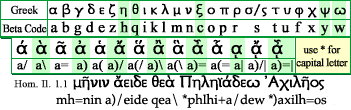
How to enter text in Greek:
hide References (11 total)
  • Cross-references in general dictionaries from this page (11):
    • Aeschines, On the Embassy, 3
    • Aristotle, Poetics, 1461b.12
    • Isocrates, To Philip, 26
    • Plato, Laws, 663e
    • Plato, Phaedrus, 265b
    • Plato, Parmenides, 133c
    • Strabo, Geography, 1.2.22
    • Plutarch, Nicias, 3
    • Lucian, Adversus indoctum et libros multos ementem, 22
    • Lucian, Pseudologista, 16
    • Dionysius of Halicarnassus, De Lysia, 17
hide Display Preferences
Greek Display:
Arabic Display:
View by Default:
Browse Bar: