Read more on the Perseus version history.
New to Perseus? Click here for a short tutorial.


Perseus News and Updates
- Please visit the Perseus Updates blog for news on project activities, research, and initiatives. We invite you to contact us via email to the Perseus webmaster if you have any comments, questions, or concerns.
- January 16, 2024: Towards a new Perseus: Update
- November 22, 2022: A great deal has happened since our last update!
- The most up-to-date versions of the Greek and Latin sources in Perseus are available on the Scaife Viewer, which, as of this date, now hosts 2,412 works in 3,192 editions and translations (1,639 in Greek and 636 in Latin) and 69.7 million words: 32.1 million in Greek, 16.3 million in Latin, with the rest consisting of English translations and sources in other languages.
- Beyond Translation is developing a next generation reading environment for Perseus that will combine the deeper coverage of the Scaife Viewer, new versions of services from Perseus 4.0, and a new generation of resources. Along with P4 component upgrades, such as dynamic maps and convenient access to lexica and commentaries, Beyond Translation incorporates exhaustive syntactic explanations and alignments at the word and phrase level between source text and translation; explanations of meter; recorded performances linked to the text; and interactive textual variants.
Support from the Mellon Foundation, Tufts University, Harvard's Center for Hellenic Studies and, above all, the National Endowment for the Humanities have made the Beyond Translation project possible.
- April 24, 2019: Current Projects and Initiatives
- Work continues on the Scaife Viewer, our first new reading environment in nearly 15 years. For more, please read About the Scaife Viewer and send us your comments.
- The Perseus Digital Library is a partner and supporter of Open Greek and Latin, an international collaboration committed to creating an open educational resource featuring a corpus of digital texts, deep-reading tools, and open-source software. Look for new OGL materials in the Scaife Viewer.
- News, help and support-related content for this site ("Perseus 4.0") will be updated periodically, but the site collections and infrastructure are no longer under active development as we begin the transition to the next phase of Perseus.
We have now completed work on Beyond Translation (a draft white paper on this work that has been submitted to the NEH Office of Digital Humanities is available here) and are focused on using the Beyond Translation work as part of an update to the Scaife Viewer. The resulting system will finally allow us to replace Perseus 4. We are calling the new version Perseus 6 (rather than 5) to reflect the amount of work embedded in the Scaife Viewer and now Beyond Translation (which we view collectively as Perseus 5). A grant from the NEH Collections and References program in the NEH Division of Preservation and Access for Perseus on the Web – preparing for the next thirty years provides the primary support for this phase of work, with additional support from the Tufts Data Intensive Studies Center, the School of Arts and Sciences, Tufts Technology Services and Google.
Our main collaborator in this phase of development is James Tauber, who is now working with Signum University. We also are waiting on Tufts administrative paperwork to finalize a contract with another group to help us reorganize the Perseus home (and associated sub pages) and replace our WordPress-based blog with the Pubpub Publishing Platform (which we already began using in documenting Beyond Translation. A draft outline of the work that we are doing is now available here.
For now, the focus of work is to fold the services visible on Beyond Translation into the Scaife Viewer. The first results from that work will probably be documentation, with changes to the Scaife Viewer following. In the meantime, we do not expect to update the Perseus 4 splashpage again.
Perseus contact and support information.
Perseus is a non-profit enterprise, located in the Department of Classical Studies, Tufts University.
The Perseus Project has been supported by various funders throughout its history:
Perseus has been most recently funded by the Alpheios Project, the Andrew W. Mellon Foundation, the Institute of Museum and Library Services, the National Endowment for the Humanities, the National Science Foundation, private donations, and Tufts University.
Prior support for the project has been provided by the Annenberg/CPB Project, Apple Computer, the Berger Family Technology Transfer Endowment, Digital Libraries Initiative Phase 2, the Fund for the Improvement of Postsecondary Education part of the U.S. Department of Education, the Getty Grant program, the Modern Language Association, the National Endowment for the Arts, the Packard Humanities Institute, Xerox Corporation, Boston University, and Harvard University.
Popular Texts
- Caesar, Gallic War (English, Latin)
- Catullus, Carmina (English, Latin)
- Cicero, In Catilinam I (English, Latin)
- Vergil, Aeneid (English, Latin)
- Herodotus, Histories (English, Greek)
- Homer, Odyssey (English, Greek)
- Plato, Republic (English, Greek)
- Tom Martin, Overview of Classical Greek History from Mycenae to Alexander (English)
Art and Archaeology
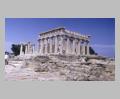
Aegina, Temple of Aphaia
|
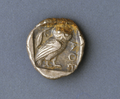
Silver obol from Athens
|

Satyr on Attic red figure vase
|

The Bartlett Head
|
Exhibits


Featured Sites
- New Alexandria Foundation
- Classical Continuum
- Stoa: Open Access Publication
- Archimedes
- The Text Encoding Initiative
- Tufts Digital Library
- Center for Hellenic Studies
- Deutsches Archäologisches Institut
- Camena-Latin Texts of Early Modern Europe
- Institute for the Study of the Ancient World
- Inscriptions of Aphrodisias
- Index Thomisticus
- Perseus under PhiloLogic